Steel vs Aluminum Mold Making for Injection Molding
CustomPartNet
·
July 7, 2026
·
Updated July 31, 2026
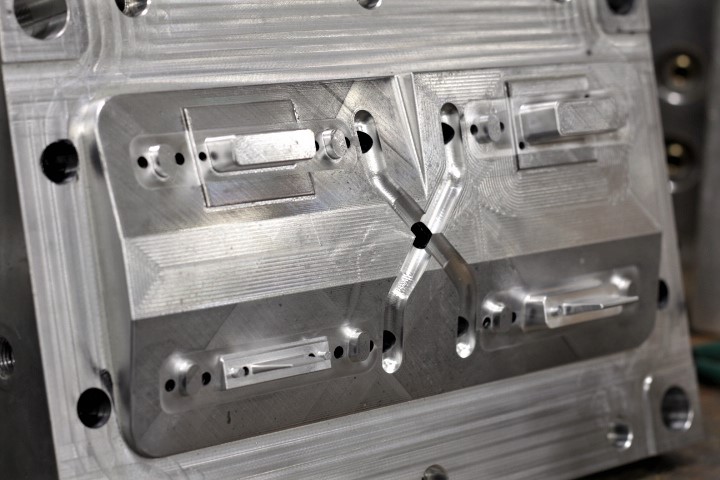
Choosing between steel and aluminum molds is one of the most important decisions in an injection molding project. Learn how the two tooling materials compare in cost, durability, lead time, production volume, and long-term value so you can select the best option for your application.
Looking to find a supplier for your mold?
Start by narrowing your supplier list to those with the tooling expertise, machining capabilities, and production capacity that match your project requirements. Factors such as mold material (steel or aluminum), certifications, industry experience, and location can all influence tooling cost, lead time, and long-term production success. Comparing real sample molds and dies can also provide valuable insight into a supplier's capabilities beyond specifications alone. Browse our supplier network to compare qualified tool & die manufacturers, examine sample molds and dies, and request quotes for your project.
Steel vs. Aluminum Mold Making for Injection Molding
Choosing the right mold material is one of the most important decisions in any injection molding project. Both steel and aluminum molds are widely used throughout the plastics industry, but each offers different advantages in terms of cost, durability, lead time, and more. Understanding the tradeoffs between steel and aluminum tooling can help manufacturers select the solution most appropriate for your production requirements.
Injection molding relies on precision-machined molds that form the shape of the final plastic part. The mold consists of two halves that close together while molten plastic is injected into the cavity under pressure.
Because tooling is often the largest upfront investment in an injection molding project, selecting the appropriate mold material can have a significant impact on project cost, lead time, and long-term production economics.
Aluminum Molds
Aluminum molds are commonly used for prototyping, bridge tooling, and low-to-medium production volumes.
Advantages
Because aluminum is easier to machine than steel, tooling can often be manufactured more quickly and at a lower cost. In addition, the superior thermal conductivity of aluminum allows heat to dissipate faster during the molding process, which can reduce cycle times and improve efficiency in certain applications.
Lower tooling costs
Faster mold manufacturing lead times
Faster design iterations
Excellent thermal conductivity
Reduced cooling times
Lower startup investment
Ideal for prototype and bridge production
Limitations
However, the main drawback of aluminum molds compared to steel molds is its longevity. As a softer metal, it has lower wear resistance, which leads to a faster decrease in part quality as the production volume rises. This results in a shorter effective lifespan, limited use of abrasive materials, and is more susceptible to damage during handling.
Lower wear resistance
Shorter mold life
More susceptible to damage
Less suitable for abrasive materials
Not ideal for extremely high production volumes
For many applications, aluminum tooling may produce tens of thousands to hundreds of thousands of parts, but mold longevity is generally lower than comparable steel tooling.
Steel Molds
On the other hand, steel molds are the industry standard for long-term production programs and high-volume manufacturing. Steel tooling requires more machining effort and monetary investment upfront, but offers significantly greater durability and mold life.
Advantages
Excellent wear resistance
Long tool life
Suitable for millions of production cycles
Better resistance to abrasive materials
Greater dimensional stability over time
Better suited for demanding production environments
Supports high-volume manufacturing
Limitations
Higher tooling costs
Longer lead times
Increased machining requirements
Higher upfront investment
Steel tooling is commonly used for consumer products, automotive components, medical devices, industrial equipment, and other applications requiring long production runs. Despite the larger initial investment, the cost per part often becomes lower at higher production volumes due to the longer service life of the tooling.
Comparing Steel and Aluminum Molds
Factor | Aluminum Mold | Steel Mold |
Tooling Cost | Lower | Higher |
Lead Time | Faster | Longer |
Machining Difficulty | Easier | More Difficult |
Thermal Conductivity | Higher | Lower |
Cooling Performance | Better | Good |
Mold Life | Lower | Higher |
Wear Resistance | Lower | Higher |
Production Volume | Low to Medium | Medium to High |
Abrasive Materials | Limited | Excellent |
Engineering Changes | Easier | More Difficult |
Long-Term Cost Efficiency | Moderate | Excellent |
Production Volume Considerations
Production volume is typically the determining factor when choosing between aluminum and steel tooling.
Low-Volume Production
For prototype programs, pilot production, and low-volume manufacturing, aluminum molds often provide the best balance of cost and speed.
Common applications include:
Product development
Design validation
Market testing
Bridge production
Startup manufacturing
Medium-Volume Production
Both aluminum and steel molds may be viable options depending on:
Expected annual volume
Part complexity
Material selection
Product lifecycle requirements
Manufacturers often evaluate total cost of ownership when determining the most economical tooling solution.
High-Volume Production
For programs requiring hundreds of thousands or millions of parts, steel molds are usually the preferred choice. The longer mold life and superior durability generally offset the higher initial tooling investment.
Material Considerations
The plastic material being molded can also influence tooling selection.
Materials that contain:
Glass fibers
Mineral fillers
Carbon fiber reinforcement
Other abrasive additives
can accelerate tool wear, and consequently demand more frequent tool replacements.
Less abrasive materials such as:
ABS
Polypropylene (PP)
Polyethylene (PE)
TPE
TPU
may be suitable for either aluminum or steel molds depending on other production requirements.
Industries Preference
Aluminum molds are frequently used in:
Consumer product development
Electronics prototyping
Startup product launches
Medical device prototyping
Industrial equipment validation
Engineering test programs
These applications often prioritize speed and lower upfront investment.
Steel molds are widely used for:
Automotive manufacturing
Consumer electronics production
Medical device production
Appliance manufacturing
Packaging
Industrial equipment
High-volume consumer goods
These industries often require tooling capable of supporting long production runs and consistent part quality over many years.
Common Questions About Steel vs. Aluminum Injection Molds
Why are aluminum molds cheaper than steel molds?
Yes. Aluminum molds typically cost less to manufacture because the raw material is cheaper and it machines more easily, lowering machining time and therefore the labor cost.
Do aluminum molds produce lower-quality parts?
Not necessarily. Aluminum molds can produce excellent part quality and dimensional accuracy. The primary differences involve mold durability and production volume capability rather than part quality.
How long do aluminum molds last?
Tool life varies significantly depending on design, material selection, and operating conditions. Aluminum molds are generally used for lower production volumes than steel molds. Your supplier should be able to provide an estimated tool life based on your requirements.
Why are steel molds used for high-volume production?
Steel offers superior wear resistance, durability, and long-term dimensional stability, making it suitable for production runs that may reach hundreds of thousands or millions of parts.
Can engineering-grade plastics be molded in aluminum tools?
Many engineering plastics can be molded successfully in aluminum tooling, although highly abrasive materials may reduce tool life.
Which mold material is best for prototyping?
Aluminum tooling is often preferred for prototyping because it offers lower costs, faster lead times, and easier design modifications.
Which mold material is best for production?
For long-term, high-volume production, steel tooling is generally the preferred choice due to its durability and extended service life.
Ready to Source Injection Mold Tooling?
Whether your project requires rapid aluminum tooling for product development or hardened steel molds for high-volume production, finding the right tooling partner is critical to project success.
Upload a CAD file, drawing, or product concept and receive quotes from qualified injection mold manufacturers experienced with both aluminum and steel tooling solutions.
Get Quotes Now → or Register for a Free Account → to discover new suppliers, create shortlists, and manage RFQs.